
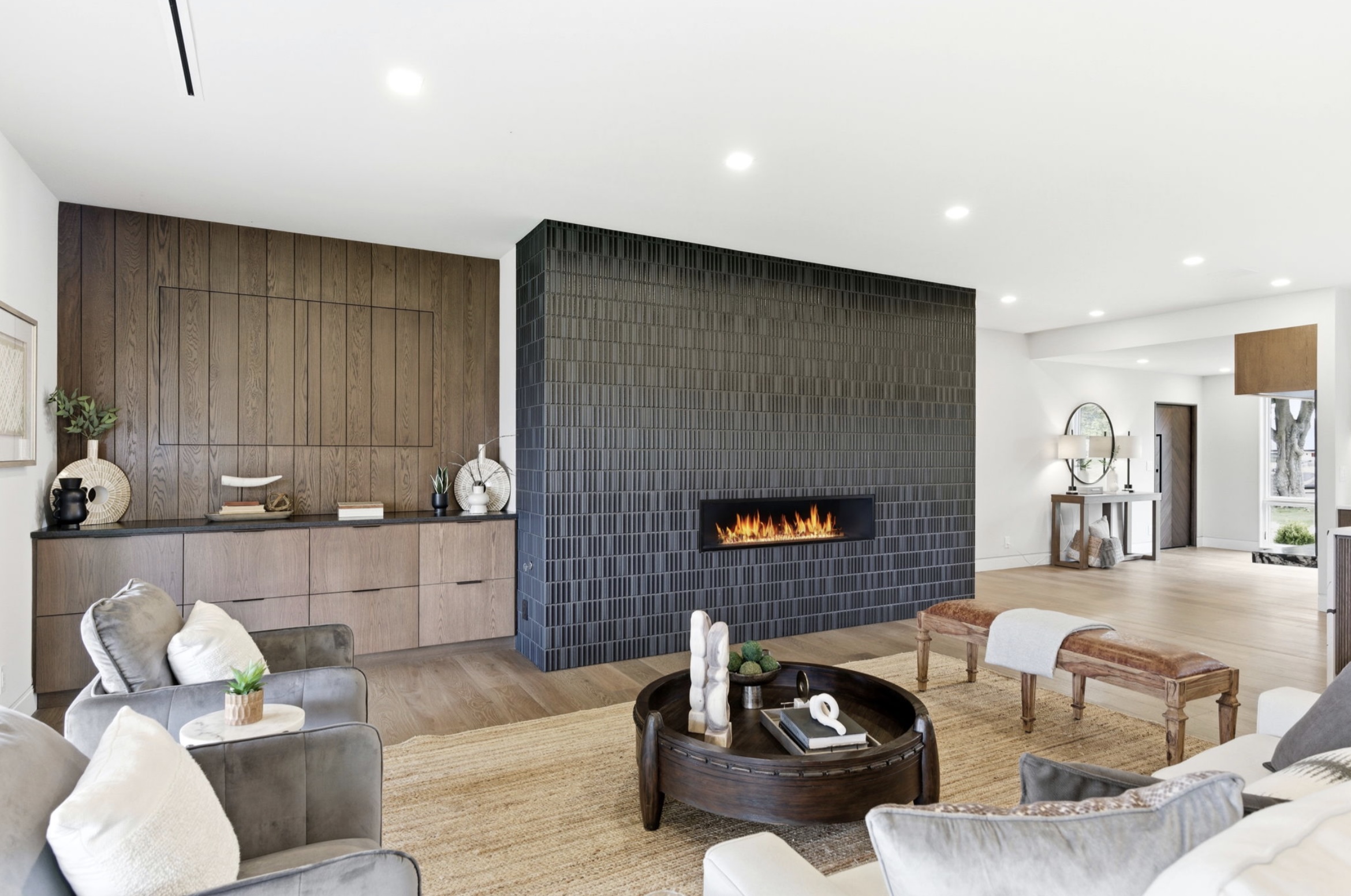
It is the question almost every prospective homeowner asks before the first sketch is ever drawn. If you have watched the Bozeman market for any length of time, you know the right existing home rarely arrives at the right moment, and when it does, it usually comes with a compromise attached. A floor plan that fights your lifestyle. A view that faces the wrong direction. A finish level that will need to be undone before it can be enjoyed.
Building offers a different proposition: a residence shaped around how you actually live, sited to take full advantage of the land you fell in love with. The tradeoff is time, patience, and a clear-eyed understanding of what construction in Montana genuinely requires. This guide weighs both sides honestly, with the realities of the Gallatin Valley front and center.
Worth is not a single number. For some families it is measured in dollars per square foot. For others it is whether the great room captures the Bridgers at sunset, or whether the mudroom can absorb four pairs of ski boots and a dog without the house feeling chaotic in February.
Before comparing building to buying, define what you are optimizing for. Cost certainty. Speed. Location. Design control. Longevity. Very few homes deliver all five, and the honest work here is deciding which two or three matter most.
Construction costs in the Gallatin Valley have risen alongside demand from buyers relocating out of higher-cost regions. Local estimates place custom construction in a broad range that climbs meaningfully for luxury-grade finishes, structural complexity, and difficult site conditions. Land is quoted separately, and a build-ready lot in or near Bozeman is a substantial line item on its own.
Buying an existing home means paying today's market price for someone else's decisions, which is entirely reasonable if those decisions align with yours. The comparison shifts in what follows the closing. Older homes in the valley frequently need updated insulation, window replacement, mechanical upgrades, or a reworked floor plan, and renovation in a high-demand construction market is not inexpensive.
The fairest comparison prices the finished, lived-in version of each option rather than the entry point. Build a realistic renovation budget for any existing home you are considering, then set that total against a custom build with the finishes and performance you actually want. Many buyers are surprised by how close the two numbers land.
This is where Montana differs most sharply from warmer markets, and where expectations most often need adjusting.
Excavation and foundation work are constrained by frost depth and ground conditions, so when your project breaks ground materially affects when it finishes. A build that starts in late spring can be fully enclosed before winter and continue interior work through the cold months. A build that misses that window may wait a season for the ground to cooperate.
A realistic Gallatin Valley timeline looks roughly like this:
An existing home, by contrast, can be yours in thirty to sixty days. If your timeline is fixed by a job start, a school year, or the sale of another property, that difference deserves real weight.
Nothing shapes a Montana build more than the ground it sits on, and no two lots behave the same way.
A parcel inside Bozeman city limits typically arrives with municipal water and sewer, paved access, and a relatively predictable permitting path. A mountain lot outside city limits may offer the view and privacy you came to Montana for while requiring a well, a septic system, a driveway engineered for winter access, utility extensions, and excavation through rock. Each carries cost, and several carry schedule risk.
None of this argues against a mountain site. The homes we are most proud of are often the ones that asked the most of the land. It does argue for walking a lot with your builder before you purchase it rather than after, because an experienced local contractor can surface site work that would otherwise appear as a surprise in month three.
The case for building:
The case for caution:
Custom building is not the right answer for everyone, and saying so plainly is part of doing this well.
Buying tends to make more sense when you need to be in the home within a defined window, when you are new to the area and want to live in the valley for a season before committing to a location, or when a property comes to market that already delivers the lot, orientation, and layout you would have designed anyway. Some buyers take a middle path: purchasing a home with strong bones and a good site, then renovating with intent.
The mistake worth avoiding is buying a home that needs substantial reworking while assuming the renovation will be simpler and cheaper than a build. In a market with limited trade capacity, that assumption often does not hold.
So, is building a custom home worth it in Montana? For homeowners who want their residence to reflect their land, their lifestyle, and their standards rather than someone else's compromises, the answer is very often yes, provided you enter with a realistic timeline and a builder who tells you the truth about what your site will require.
At Landon Bradley Custom Homes, we oversee every aspect of the design and build process, from the earliest sketches through the final walkthrough. You can see how that approach translates to this landscape in our Mountain Style portfolio, where contemporary design meets the rugged texture of stone, timber, and steel in places like Bozeman and Jackson.
If you are weighing a build against a purchase, we would welcome the conversation, including the parts of it that might point you toward buying. Schedule a consultation and let's talk through your land, your timeline, and what building in Montana would actually look like for you.
Is it cheaper to build or buy a house in Montana? Buying is usually less expensive at the point of purchase. Once you include renovation and mechanical upgrades on an older home, the totals often converge. Compare finished outcomes, not starting prices.
How long does it take to build a custom home in Bozeman? Plan on twelve to eighteen months of construction after design and permitting, which together add another four to nine months. Mountain sites extend that range.
Do I need to own land before contacting a builder? No, and there is a strong argument for the opposite. Involving your builder during the land search clarifies site costs, buildability, and access before you commit to a parcel.
What drives cost most in a Montana custom home? Site conditions, square footage, structural complexity, and finish level, roughly in that order. Rocky or sloped ground, long utility runs, and heavily engineered rooflines all carry meaningful cost.
Can I build during a Montana winter? Yes, though sequencing matters. Once a home is enclosed, interior work continues through winter. Excavation and foundation work are most affected by frost.