
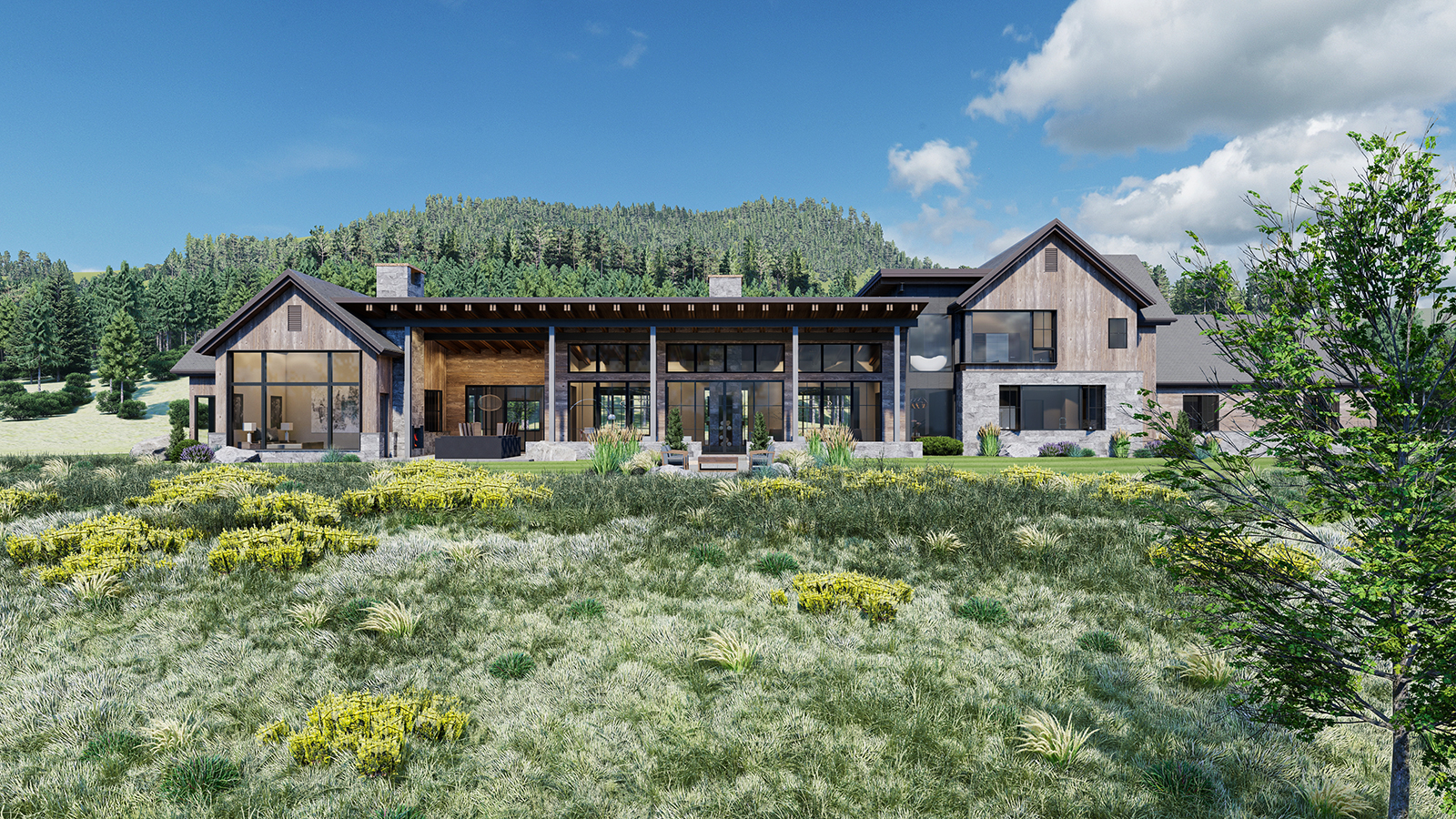
If you are planning a home in the Gallatin Valley, you have probably used the words “builder” and “contractor” as if they mean the same thing. Most people do, and in casual conversation it hardly matters. It matters a great deal once you are signing contracts.
The two roles overlap, but they carry very different scopes and very different experiences for you as the homeowner. Choosing the wrong one is among the most expensive missteps we see in Montana residential construction. Here is what actually separates them.
A general contractor is a construction manager. The role begins when a finished set of plans lands on the desk and ends when the certificate of occupancy is issued.
Within that window, the work is substantial. A good contractor schedules and supervises subcontractors, orders materials, coordinates inspections, and holds every trade to the drawings in front of them.
What a general contractor is generally not responsible for is everything upstream of those drawings—evaluating whether a lot can support the home you have in mind—advising which design decisions will consume the budget and which will deliver value for decades. Aligning an architect, an engineer, and a designer around one shared vision. Contractors build the plan. They rarely shape it, and that distinction is the whole conversation.
A custom home builder carries all of that construction responsibility and adds everything that comes before it.
At Landon Bradley, we are involved before the first line is drawn. We walk the property with you and talk through how you actually live, where the light falls in the afternoon, whether you host twice a year or twice a month. We collaborate with award-winning architects and engineers to turn that into a design that is both beautiful and genuinely buildable on your site and within your budget. Then we build it and hand you the keys.
One team. One point of accountability. No gap between the people who designed your home and the people responsible for delivering it.
With a general contractor, you assemble the team yourself. You hire an architect, wait months for drawings, then take them out to bid. When the bids come back above budget, and they often do, you return to the architect and start editing. With a custom builder, cost intelligence is present during design, so decisions are pressure-tested against real numbers as they are made rather than after.
In the contractor model, coordination is your job. When the architect specifies something the site cannot accommodate, you relay the message between professionals who have never worked together. In the custom builder model, that coordination is ours, handled through long-standing relationships with architects, engineers, and trade partners.
A contractor bid is a price on a defined scope. Anything not on the drawings becomes a change order, and change orders during construction are the most expensive way to make a decision. A custom builder develops the budget alongside the design so surprises surface while they are still inexpensive to solve.
Split responsibility invites finger-pointing. When a detail does not perform, the contractor points to the drawings and the architect points to the execution, and the homeowner pays for the disagreement. When design and construction live under one roof, that responsibility has nowhere else to go.
A luxury home involves thousands of individual choices. Hardware, tile layout, lighting temperature, cabinet reveals, the way a stair rail meets a wall. Most contractors will install whatever you select. A custom builder guides those selections and holds the palette together so the finished home reads as one coherent idea rather than a collection of decisions made in isolation.
Building in southwest Montana is not the same as building in a flat suburban subdivision, and the gap between the two models widens here. The season is short. Excavation and foundation work are constrained by frost, and missing a window in the fall can push a project into the following spring, so sequencing has to be right the first time.
The sites are demanding. Slope, rock, seasonal water, wind exposure, and snow load all influence what a home can be, and they influence it at the design stage rather than at framing. A builder who sees the property before the plans are final can position the home to capture the view and shed the weather. A contractor handed finished plans is obligated to build what is on the paper.
Approvals and trade capacity also take time. Depending on where you build in Gallatin County, you may be working through septic permitting, well testing, driveway access requirements, or subdivision design guidelines, and the best subcontractors in the Bozeman market book out well ahead.
We would rather be honest than universal. A general contractor is a sensible choice when you already have a complete, permit-ready set of plans you are happy with, when the site is forgiving, when your budget is firm and your scope is unlikely to change, and when you have the time to manage the moving pieces yourself. If that describes your project, hire a good contractor and enjoy the process.
If instead you are starting from a piece of land and an idea, or you want a home that reflects the way your family actually lives, the custom route is not a luxury upgrade. It is the shorter path.
The answers will tell you which model you are actually being offered, regardless of the title on the card.
The difference between a custom home builder and a general contractor is not skill. It is scope, and therefore how much of the project you are expected to carry yourself. A contractor executes a plan. A custom home builder helps you arrive at the right plan, executes it, and stands behind the result.
At Landon Bradley, we believe good design is the investment that pays dividends every day you live in the home, which is why we refuse to treat design and construction as separate transactions. That outcome starts long before the foundation.
If you are weighing your options for a home in Bozeman or elsewhere in the Gallatin Valley, we would welcome the conversation.
Get In Touch
Is a custom home builder more expensive than a general contractor?
Not necessarily, and often the opposite once the full picture is accounted for. A contractor bid looks lower because it covers a narrower scope. The design coordination, budget management, and problem-solving still have to happen, and in that model they either fall to you or surface later as change orders. Custom builders bring cost visibility into design, where the largest savings live.
Do I need an architect before I contact a custom home builder in Bozeman?
No, and in most cases it is better if you have not committed to plans yet. Bringing a builder in alongside the architect lets the design and the budget develop together and keeps you from paying for drawings that later need revision.
Do custom home builders in Montana also serve as the general contractor?
Yes. A custom home builder performs the general contracting function and adds design coordination, preconstruction, and project management around it. Montana requires construction contractors with employees to register with the state Department of Labor and Industry, so confirm registration and insurance for any firm you consider.
How long does it take to build a custom home in Montana?
Most custom homes in the Bozeman area run roughly twelve to twenty-four months from the start of design to move in, depending on size, site complexity, and approval timelines. Because the season is short, when a project starts often matters as much as how long it takes.
Can a custom home builder work from plans I already have?
Absolutely. If you already have a design you love, we can review it for buildability, cost, and site fit, then build it. That review alone frequently identifies adjustments worth making before construction begins.
Every Landon Bradley home is built to reflect the lifestyle of the person living in it. If that is the kind of home you have in mind, we would like to hear about it.
Schedule a consultation with our Bozeman team and let us walk through your project together.